Development
Custom software vs off-the-shelf: how to choose the right fit
Between generic packaged software and custom development, the right choice depends on your business processes. Our guide to deciding.

“Should we buy an off-the-shelf solution or have custom software built?” It is one of the questions business leaders ask us most often. The answer is never ideological: it depends on the nature of your processes, your budget and your growth horizon.
When off-the-shelf is enough
Packaged software has real strengths: controlled entry cost, fast deployment, an existing community and documentation. For highly standardized needs, such as conventional accounting, regulation-compliant payroll or simple invoicing, reinventing the wheel makes no sense. If your process looks like that of thousands of other companies, a proven solution will often offer the best value for effort.
When custom becomes an advantage
Custom development comes into its own when the way you work is a differentiator. That is the case when:
- your business processes do not fit the boxes of generic packaged software;
- you juggle several tools that nobody manages to connect;
- a business rule specific to your industry or market is not supported by any commercial solution;
- you want to control how the tool evolves over time, without depending on a third-party vendor's roadmap.
Software designed around your real processes, rather than the other way round, avoids the classic trap where the company has to bend to the tool.
The real criterion: total cost, not just the purchase price
A cheap off-the-shelf solution can prove expensive if it forces constant workarounds, manual re-entry or paid modules stacked on top of each other. Conversely, custom development requires a higher upfront investment but can be more economical over time if it removes daily inefficiencies. The right reasoning is about total cost of ownership over several years.
The hybrid approach, often the most realistic
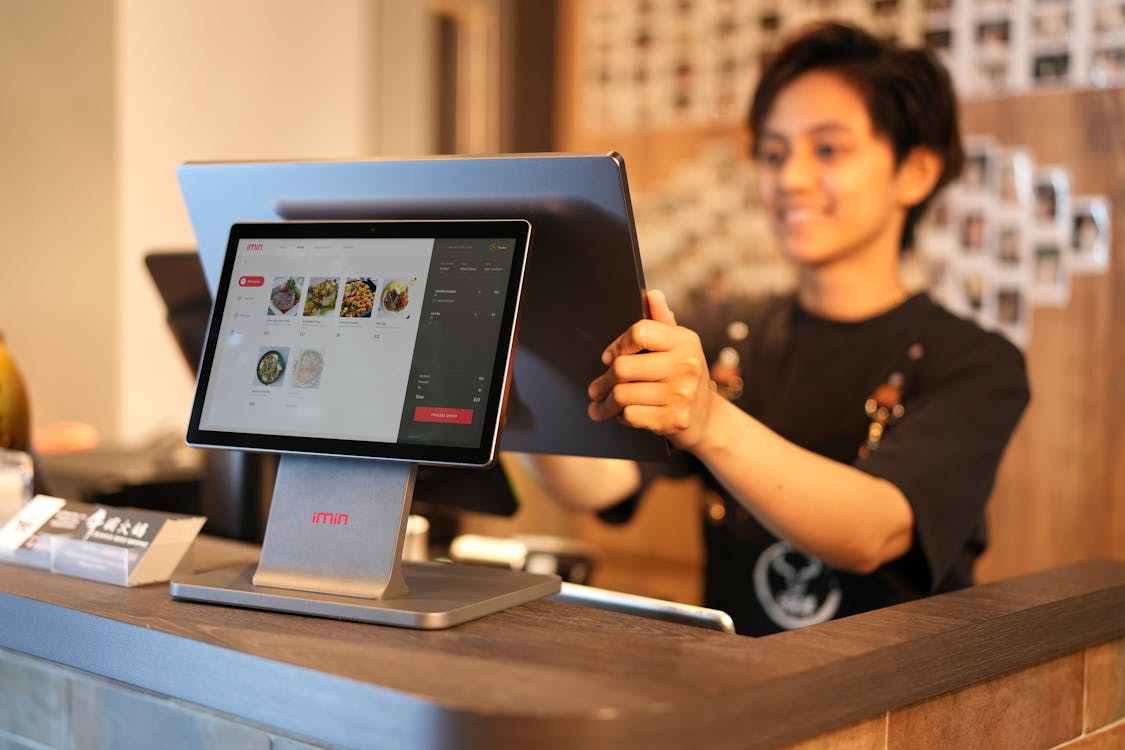
In practice, the line is rarely binary. Many companies choose a modular base (ERP, POS, CRM) that they customize where they are distinctive, and complement it with dedicated development or mobile apps. This is the approach My Partner ISC favors: start from solid, proven building blocks, then adapt them to the client's business, without rebuilding everything or putting up with everything.
Our guidelines for deciding
- List your processes and separate those that are standard from those that set you apart.
- For standard processes, lean toward packaged software; for differentiating ones, consider custom.
- Think in total cost over three to five years, including integration and maintenance.
- Make sure the chosen solution can evolve with you.
Framed well, this choice does not pit the two worlds against each other: it is about putting custom where it creates value, and standard where it saves effort.